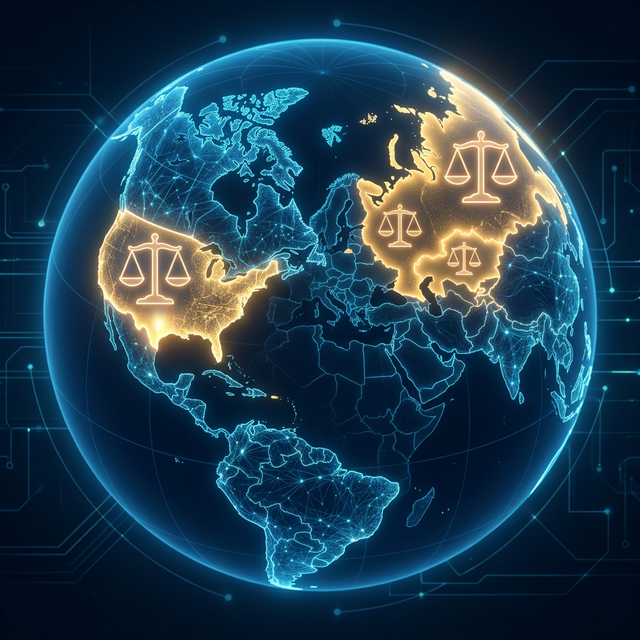
Global Mining Jurisdictions: 2026 Regulatory Risk Map
Global Mining Jurisdictions: Regulatory Risk Map for Bitcoin Miners in 2026
The best Bitcoin mining jurisdiction in 2026 is not simply the place with the cheapest electricity. It is the place where cheap power, grid rules, licensing, tax treatment, curtailment rights, and political durability line up. The United States, especially ERCOT-connected Texas, offers deep capital markets and flexible-load programs but faces grid scrutiny. Russia has legalized mining but adds sanctions, registry, reporting, and regional power-risk complexity. Kazakhstan has a formal mining framework, but quotas, licensing, and exchange-sale rules make it a compliance-first jurisdiction rather than a free-power frontier.
That means jurisdiction analysis should look like underwriting, not a slogan. A miner should ask: can I plug in, stay legal, curtail when needed, keep banking access, move coins, and survive the next rule change?
The 2026 jurisdiction scorecard
| Jurisdiction | 2026 mining thesis | Regulatory posture | Main advantage | Main risk |
|---|---|---|---|---|
| United States / Texas | Large flexible-load mining tied to ERCOT power markets | Legal but increasingly watched by grid planners, utilities, and state regulators | Deep capital markets, curtailment programs, public-company disclosure | Interconnection delays, large-load scrutiny, local backlash, power-price volatility |
| Russia | Legalized industrial mining and formalized oversight | Legal from Nov. 1, 2024 for registered businesses, with reporting and energy limits | Stranded energy potential and state interest in crypto-linked settlement | Sanctions, registry enforcement, regional bans, opaque policy execution |
| Kazakhstan | Licensed mining under digital-asset law | Legal but quota-based, licensed, and tied to AIFC exchange infrastructure | Formal legal structure and established mining history | Electricity constraints, mandatory channels, licensing burden, policy reversals |
| Other energy-rich markets | Opportunistic stranded-energy mining | Highly country-specific | Cheap power, hydro, gas, geothermal, or flare mitigation | Rule uncertainty, weak grid data, political risk, capital controls |
The practical conclusion is that the United States is still the easiest jurisdiction for public-market investors to diligence, Russia is the most geopolitically complicated, and Kazakhstan is the clearest example of a country that moved from mining boom to managed containment.
Why geography matters more after the halving
After the 2024 halving, miners lost half of the block subsidy per block. The industry response was predictable: upgrade ASICs, chase cheaper power, sell more BTC during weak months, and search for markets that reward curtailment or flexible load. Geography became a margin line.
The jurisdiction now determines:
| Jurisdiction factor | Why it affects miner value |
|---|---|
| Power price | Directly changes breakeven hashprice and machine life |
| Curtailment rights | Allows miners to earn value by shutting down during grid stress |
| Interconnection process | Determines how quickly announced megawatts become operating hashrate |
| Licensing and reporting | Changes compliance cost and shutdown risk |
| Tax treatment | Affects retained BTC, realized gains, and project-level returns |
| Banking and sanctions access | Determines whether coins, cash, and equipment can move normally |
| Local politics | Can turn a cheap site into a stranded asset |
This is why a miner with a low quoted electricity price can still be risky. If the miner cannot secure permits, cannot import machines, cannot sell coins through compliant venues, or can be curtailed without compensation, cheap power is not cheap.
United States and Texas: the transparent but crowded hub
The United States remains one of the most financeable Bitcoin mining jurisdictions because public miners can access equity markets, debt markets, audited reporting, established service providers, and legal recourse. Texas is the center of that discussion because ERCOT has become the main laboratory for large flexible load.
The U.S. Energy Information Administration reported that electricity consumption in Texas is growing fastest in the United States and that large-scale computing facilities, including data centers and cryptocurrency mining operations, are a major driver. In EIA's 2025 forecast, ERCOT large flexible load customers were expected to consume 54 billion kWh, up almost 60% from expected 2024 demand, equal to about 10% of total forecast ERCOT electricity consumption for the year.
That is both bullish and bearish.
| Texas signal | Bullish reading | Bearish reading |
|---|---|---|
| Large flexible load growth | Miners and data centers can monetize energy flexibility at scale | Grid planners and politicians may tighten interconnection and cost allocation |
| ERCOT curtailment programs | Miners can reduce demand during scarcity periods and potentially earn market value | Revenue depends on market design, weather, price spikes, and rule changes |
| Public miner concentration | Investors can compare disclosures and operating performance | Crowded power queues can delay deployment |
| Data center crossover | Mining sites can become AI/HPC infrastructure candidates | AI loads may outbid miners for premium power and land |
ERCOT created a voluntary curtailment program for large flexible customers in December 2022, explicitly naming bitcoin mining facilities as examples of large customers that can reduce consumption during high-demand periods. That structure supports the pro-mining argument: mining can be interruptible in a way many industrial loads are not.
But the 2026 load forecast shows the other side. ERCOT's April 15, 2026 preliminary long-term load forecast projected approximately 367,790 MW of demand in the ERCOT region by 2032, compared with an all-time peak demand of 85,508 MW recorded on August 10, 2023. ERCOT said large load customers include data centers, cryptocurrency mining, industrial, and oil and gas processes. Even if the number is preliminary and not a prediction of what will be built, it tells investors that grid planning has become the center of the mining thesis.
The U.S. verdict: strong for transparent operators with real power strategy, weaker for miners whose entire thesis is "Texas power is cheap."
Russia: legalization with a heavy state filter
Russia is no longer a simple "gray market mining" story. It formalized mining, but formalization means oversight.
Interfax reported that President Vladimir Putin signed a law legalizing cryptocurrency mining in Russia from November 1, 2024. Legal commentary from Awara describes the framework this way: companies and sole proprietors need to join a special register to mine legally, while individuals can mine without registration only within government-set electricity-consumption limits. The same summary notes reporting obligations for wallets and cryptocurrency received, restrictions for certain electricity-sector companies, and possible regional restrictions.
CoinDesk reported in July 2025 that Russia's Ministry of Energy had compiled a registry of cryptocurrency mining equipment and distributed it to high-activity regions, with officials saying the registry would help identify mining operations, track energy consumption, and bring miners under tax and regulatory rules.
For miners, that creates a mixed picture:
| Russia factor | Interpretation |
|---|---|
| Legalization | Reduces ambiguity for registered industrial miners |
| Equipment registry | Helps enforcement and tax oversight, but reduces anonymity |
| Energy-consumption limits | Pushes larger operators into formal registration |
| Regional restrictions | Cheap-power sites may still face local bans or curtailment |
| Cross-border settlement interest | Makes mining strategically relevant to the state |
| Sanctions environment | Raises equipment, banking, exchange, insurance, and counterparty risk |
The bullish view is that Russia has energy resources, cold climates in some regions, industrial power infrastructure, and state-level reasons to support mining where it helps monetization or settlement. The bearish view is that policy can change quickly, foreign capital faces sanctions risk, and the legal system may not protect outside investors the way U.S. or other developed-market venues do.
Russia's mining sector may grow, but public-market investors should not treat Russian hashrate as equivalent to U.S. hashrate. The discount rate should be higher.
Kazakhstan: from boomtown to compliance gate
Kazakhstan is the cautionary case for miners who assume cheap power is enough.
After China's 2021 mining crackdown, Kazakhstan attracted miners because of energy availability, geography, and existing industrial infrastructure. But that growth stressed the grid and pushed policymakers toward a more controlled model.
Morgan Lewis summarized Kazakhstan's 2023 digital-asset law and amendments. The law made digital mining a licensed activity, with licenses issued for three years by the competent authority. It also limited mining to individual entrepreneurs and legal entities of Kazakhstan, required mining through digital mining pools and data processing centers, and created obligations around licensed digital-asset exchanges. Starting January 1, 2024, at least 50% of mined digital assets had to be sold through AIFC-licensed exchanges, rising to 75% from January 1, 2025. The amendments also introduced electricity-purchase rules, including automatic electricity metering systems and quota-based electricity purchases.
That is a very different operating environment from the early post-China migration.
| Kazakhstan rule area | Miner implication |
|---|---|
| Licensing | Mining is legal only inside a defined compliance perimeter |
| Local entity requirement | Foreign miners need a proper Kazakhstan operating structure |
| AIFC exchange channel | Coin sales may need to pass through licensed domestic infrastructure |
| Electricity quotas | Growth depends on approved power allocation, not only site demand |
| Metering systems | Regulators can monitor energy consumption more closely |
Kazakhstan can still work for compliant industrial miners. It is not ideal for operators who need maximum freedom to move hash, coins, and capital without local constraints.
The investor takeaway is clear: Kazakhstan is not a "ban" story. It is a "permissioned mining" story. That may be better for long-term state legitimacy, but it reduces the option value that miners enjoyed during the first migration wave.
How to compare jurisdictions
Use this operating-risk framework instead of headline electricity prices:
| Score area | Good jurisdiction | Weak jurisdiction |
|---|---|---|
| Power | Low cost, contracted, reliable, and politically durable | Cheap today but exposed to rationing or subsidy backlash |
| Grid relationship | Clear interconnection and curtailment rules | Informal approval or unclear emergency powers |
| Legal status | Mining explicitly permitted under a known framework | Legal gray zone, surprise enforcement, or licensing ambiguity |
| Tax and reporting | Known obligations with workable compliance systems | Unclear treatment of mined coins, VAT, income, or export |
| Coin mobility | Clear banking, exchange, and custody pathways | Capital controls, sanctions, or forced domestic channels |
| Equipment mobility | ASIC import, repair, and resale are feasible | Customs delays, sanctions, or seizure risk |
| Data transparency | Public reports, grid data, and company disclosures exist | Investors rely on local claims that are hard to verify |
The strongest mining jurisdictions do not need to be perfect. They need to be legible.
The 2026 ranking by investor usability
| Rank | Jurisdiction | Why |
|---|---|---|
| 1 | United States / Texas | Best disclosure environment and capital access, despite growing grid and political scrutiny |
| 2 | Kazakhstan | Clearer than many emerging markets, but quota, licensing, and exchange-channel rules constrain flexibility |
| 3 | Russia | Large energy potential and legalized mining, but sanctions and state-control risk require a much higher discount rate |
This ranking is not a moral or political endorsement. It is an investor-usability ranking. A miner may earn high returns in a harder jurisdiction, but investors need a larger margin of safety when legal recourse, sanctions, or rule stability are weak.
What this means for public mining stocks
Public miners should disclose jurisdiction risk with the same seriousness they disclose fleet efficiency. A strong 2026 mining update should answer:
| Disclosure question | Why it matters |
|---|---|
| How many MW are operating, contracted, and merely planned? | Prevents announced capacity from being treated as live hashrate |
| What jurisdiction is each site in? | Connects power cost to regulatory risk |
| Are curtailment credits recurring or one-off? | Separates durable grid strategy from weather-driven windfalls |
| Can the company move mined BTC freely? | Important for treasury and debt service |
| Are there regional bans, quotas, or metering rules? | Determines shutdown and compliance risk |
| Is the site useful for AI/HPC if mining weakens? | Adds optionality only if power and fiber quality support it |
The best miners will look boring in the right ways: clear contracts, clear permits, clear curtailment logic, clear reporting, and clear fallback plans.
FAQ
Is Texas still good for Bitcoin mining?
Yes, but it is no longer a simple cheap-power story. Texas offers scale, power-market sophistication, and curtailment programs, while also facing large-load scrutiny as data centers and miners compete for grid capacity.
Is Bitcoin mining legal in Russia?
Russia legalized cryptocurrency mining from November 1, 2024 under a formal framework. Registered businesses and entrepreneurs can mine, while individual miners face electricity-consumption limits and reporting obligations. Investors should still account for sanctions and regional enforcement risk.
Is Kazakhstan anti-mining?
Kazakhstan is better described as permissioned rather than anti-mining. Mining is legal under a licensing framework, but operators face local-entity requirements, electricity quotas, metering, and exchange-channel rules.
What is the biggest jurisdiction mistake miners make?
The biggest mistake is treating electricity price as the whole decision. A low power price can be overwhelmed by curtailment without compensation, legal uncertainty, tax friction, banking limits, or equipment import risk.
Which jurisdiction is best for public-market investors?
The United States is usually easiest to underwrite because investors can inspect public-company filings, grid data, and legal processes. That does not make every U.S. miner attractive; it makes the risk easier to measure.
What to read next
Source note
This page reflects sources available as of July 11, 2026. Mining law, energy tariffs, sanctions policy, interconnection rules, and exchange requirements can change quickly. Treat this as a jurisdiction-risk map, not legal advice or a site-selection memo.
Sources
Primary documents, market context, and methodology references behind this article.
Texas power-demand growth from data centers and cryptocurrency mining, including ERCOT large flexible load forecasts.
ERCOT program allowing large flexible customers, including bitcoin mining facilities, to reduce load during peak demand.
April 2026 ERCOT forecast discussing large load customers such as data centers, cryptocurrency mining, industrial, and oil and gas processes.
Report that Russia legalized cryptocurrency mining from November 1, 2024.
July 2025 report on Russia's mining-equipment registry, tax oversight, and energy-consumption tracking.
Kazakhstan digital-mining licensing, AIFC exchange-sale requirements, metering, and electricity-quota framework.