Bitcoin ETF Quarter-End Stress Test: What July 2026 Needs To Repair
Senior Research Analyst • CryptosEyes Group
Bitcoin ETF Quarter-End Stress Test: What July 2026 Needs To Repair
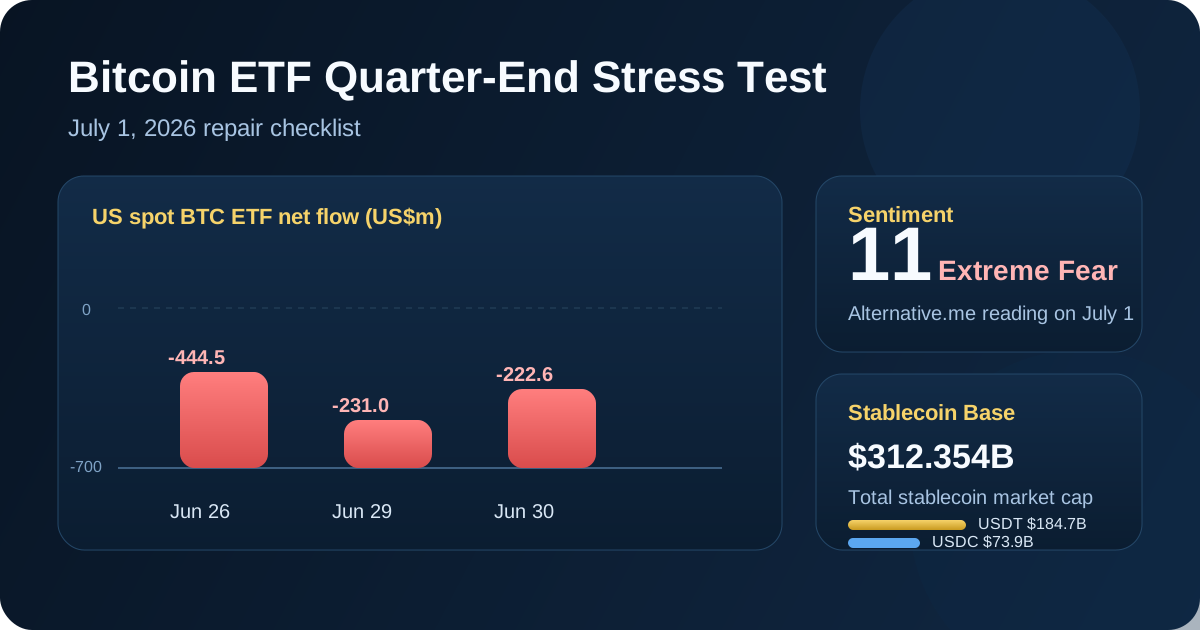
!Bitcoin ETF quarter-end stress test chart for July 2026
Short Answer: July 2026 starts with Bitcoin in a fragile spot, not a broken one. US spot Bitcoin ETFs finished June 30 with another net outflow day, BlackRock's IBIT led the selling, Bitcoin is still hovering near $59,000, and the Crypto Fear & Greed Index has slipped to 11. The market does not need a miracle to stabilize, but it does need three things quickly: ETF outflows to stop getting worse, fear to lift out of panic territory, and spot demand to defend the $58,000 to $60,500 band.
The key point is simple. Quarter-end outflows are not automatically a long-term bearish verdict. But when they arrive after several negative flow sessions and while sentiment is already washed out, they become a stress test of whether institutional demand is still willing to defend the summer range.
What Actually Changed On June 30
The freshest external flow table from Farside shows -$222.6 million in net US spot Bitcoin ETF flow on June 30, 2026. The important detail is concentration. IBIT accounted for -$212.4 million, FBTC for -$10.2 million, and the rest of the table was effectively flat that day.
That matters because a broad, messy outflow can point to general risk reduction across platforms. A concentrated outflow led by the largest product tells us the biggest institutional liquidity rail is still being used as an exit valve when allocators want less crypto exposure.
This does not prove a structural trend by itself. It does show that late-June weakness was not limited to retail fear or leveraged futures liquidations. The largest ETF wrapper was still bleeding on the last trading day of the quarter.
The July 1 Snapshot
The stress test looks sharper when the flow table is combined with today's market and sentiment backdrop:
| Signal | July 1 Read | Why It Matters |
|---|---|---|
| BTC spot price | about $59,031 | Bitcoin is still trading close to the same support shelf that held through late June |
| ETH spot price | about $1,590 | ETH is steady, but it is not showing a broad risk-on breakout either |
| Crypto Fear & Greed | 11, Extreme Fear | Panic has deepened from yesterday's already weak reading |
| Total stablecoin market cap | $312.354 billion | There is still plenty of dollar liquidity in crypto, but it is not aggressively chasing risk |
| USDT market cap | $184.685 billion | Tether remains the dominant trading rail |
| USDC market cap | $73.881 billion | Regulated-dollar liquidity is still large enough to matter for institutional deployment |
| June 30 BTC ETF flow | -$222.6 million | Quarter-end ended with another confirmed risk-off day |
This mix is why July starts as a repair month, not a celebration month. The stablecoin base is large. The price damage is real but not catastrophic. Yet the flow and sentiment readings still say investors are in preservation mode.
Why Quarter-End Flow Matters More Than One Normal Red Day
Quarter-end often forces funds to rebalance exposures, trim volatile winners and losers, and clean up risk reports. That means one ugly session can overstate how bad the true trend is. But quarter-end also reveals something useful: what portfolios look like after managers have had every incentive to reduce embarrassment risk.
If a manager wanted to show cleaner balance-sheet optics into quarter close, crypto was still a candidate for trimming. That is the bearish read.
The less bearish read is more tactical. Some of the June 30 flow pressure may have been calendar-driven rather than conviction-driven. If that is true, July can improve quickly if the first few trading sessions stop printing large outflows and Bitcoin holds support.
So the practical question is not "Was June 30 bad?" It clearly was. The practical question is whether the June 30 red print becomes the last forced cleanup day or the first day of a new July liquidation leg.
Why The Stablecoin Base Has Not Turned Into A Buy Wall Yet
DefiLlama still shows more than $312 billion in stablecoins outstanding, with USDT and USDC accounting for the overwhelming majority of that float. In theory, that is enough dry powder to absorb a moderate ETF de-risking wave.
In practice, stablecoins do not become bullish just because they exist.
Here is the thing:
This is why a large stablecoin base is better read as capacity than commitment. Capacity says the market can buy. Commitment says the market wants to buy now. July 1 still looks like capacity without commitment.
If you are tracking stablecoin risk rather than using the aggregate headline alone, pair this note with our stablecoin proof-of-reserves checklist and the exchange reserve risk checklist.
The Three Repairs Bitcoin Needs In July
Bitcoin does not need a heroic narrative reset this week. It needs normal, boring repairs that markets rely on after a de-risking wave.
1. ETF Outflows Need To Flatten First
The first sign of repair is not a huge inflow day. It is the absence of another ugly outflow streak. If ETF flows move from deeply negative to flat or slightly positive, the market gets room to breathe.
Why this matters:
2. Fear Needs To Lift Off The Floor
A Fear & Greed reading of 11 tells you the market still expects bad outcomes. That kind of reading can create value, but it does not create stability by itself. A move back into the high teens or low 20s would matter because it would show panic is starting to break.
The signal is not mystical. It just means traders are less desperate to get smaller.
3. Price Must Hold The Summer Support Band
The local structure is still centered on the late-June support area. For now, the practical zone remains roughly $58,000 to $60,500.
Our earlier Bitcoin ETF outflow shock audit explains why this band became the key line in the first place.
Macro Still Has Veto Power
Crypto-specific flows matter, but they are not the only input. Late June still featured a firm dollar, elevated Treasury yields, and a market waiting on fresh US labor and policy signals. That backdrop keeps the hurdle rate high for non-yielding assets.
That does not mean Bitcoin cannot rally. It means the rally must work harder.
When cash and government paper still offer credible yield, allocators do not need to chase volatility just because Bitcoin looks cheaper than it did in spring. That is why crypto-specific stabilization must happen at the same time as macro pressure stops intensifying.
For the broader framework, read our earlier US Treasury yield and Bitcoin summer range audit. The short version is that Bitcoin can survive a high-yield world, but it usually needs stronger spot demand and cleaner liquidity conditions to do it.
What A Better July Would Look Like
The bullish case for July is not difficult to map:
If those conditions show up together, the June 30 outflow becomes a quarter-end flush instead of the opening step of a larger drawdown.
What A Worse July Would Look Like
The bearish checklist is just as clear:
That combination would tell us late June was not just calendar pressure. It would point to a more durable institutional and macro de-risking phase.
FAQ
Was June 30 just quarter-end window dressing?
Possibly in part, but not safely enough to dismiss. Quarter-end rebalancing can exaggerate one session. The problem is that June 30 came after several weak ETF sessions and while sentiment was already in Extreme Fear. That makes follow-through more important than excuses.
Why does IBIT matter so much in the daily flow table?
IBIT is the largest and most closely watched US spot Bitcoin ETF. When the biggest wrapper leads outflows, it is a stronger institutional signal than a small product moving on its own.
Is a Fear & Greed reading of 11 automatically bullish?
No. It shows panic, not a confirmed bottom. Panic can create opportunity, but repair still requires better flows, better price action, or both.
Are stablecoins bullish for Bitcoin here?
Only if they move. A large stablecoin base means the market still has funding capacity. It does not prove buyers are ready to deploy capital at current prices.
What is the main level to watch now?
The practical zone is still roughly $58,000 to $60,500. Holding it keeps the repair case alive. Losing it would put the market back into a more defensive posture.
Source notes: ETF flow figures are based on the June 30, 2026 Farside US spot Bitcoin ETF table. Sentiment uses the latest Alternative.me Crypto Fear & Greed reading on July 1, 2026. Stablecoin market-cap figures use the DefiLlama stablecoins dashboard on July 1, 2026. BTC and ETH spot references are current market benchmarks at time of writing and should be treated as intraday values, not closing prices.
Source & Review Basis
This article is reviewed against the source types below. Source links are provided to help readers verify primary documents, market context, and methodology independently.
How treasury data, market metrics, and corrections are reviewed.
ETF registration statements, prospectuses, and issuer disclosures.
Issuer product information for spot Bitcoin ETF structure and disclosures.
Issuer product information for spot Bitcoin ETF flows and market context.
Macro series used for liquidity, rates, dollar, and risk-asset context.
Treasury yields and government-market data used in macro comparisons.